Querida Amiga
I am back home now with my family, so this is my last Espana Sola.We said goodbye in Avila, the city of Santa Teresa, so I’m writing this for you.
I have just visited the Convento de Santa Teresa, 10 minutes walk from where we stayed in Avila. We spoke often about Teresa, her life, her writing and her struggles with her own demons on the way to faith, The visit raised many of the things we talked about while we walked together.
The Spanish word “ causas” conveys much more than “things”, and the Convento visit encapsulated a causa that has become increasingly persistent, with visits to Spanish churches and historical sites. This last week in Avila, Santa Teresa’s home encircled by its Medieval walls , one causa shouts out to me: where is the humour , the steadfastness, the uncertainty of the woman?Descriptions of the young Teresa mention her beauty and exuberant, extroverted personality. Where, also, in the recreation of parts of her life in the Cathedral and the museum, is the simplicity and directness ?
There is some simplicity. The restored Cathedral on the site of the family home has the original baptismal font where Teresa was christened in 1515 and a model of the sparsely furnished room she lived in while in her first Carmelite Convent. But 17C Church glitter and a somewhat one dimensional, stolid , safe Catholic narrative in the museum beneath threatens to overshadow the 16C persona of Teresa de Cepeda y Alumada. A makeover?
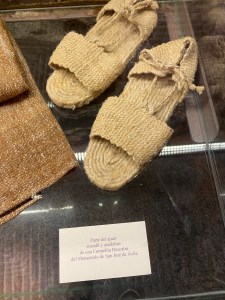
Teresa is celebrated for cutting through the excesses and strictures of the Catholic Convents of her day. She introduced the famous discalced ( sandled) feet covering: the practice of wearing sandals instead of shoes. Prominent 16C mystic and reformer , she founded San Jose Convent and the Discalced Carmelites. Copies of the rope sandals are displayed in the Convento museum.
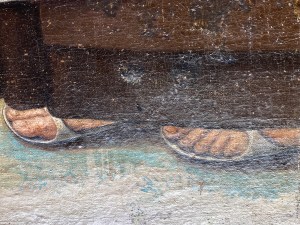
They also peep out from beneath her robes in some of the more interesting statues and paintings in the museum devoted to her life .
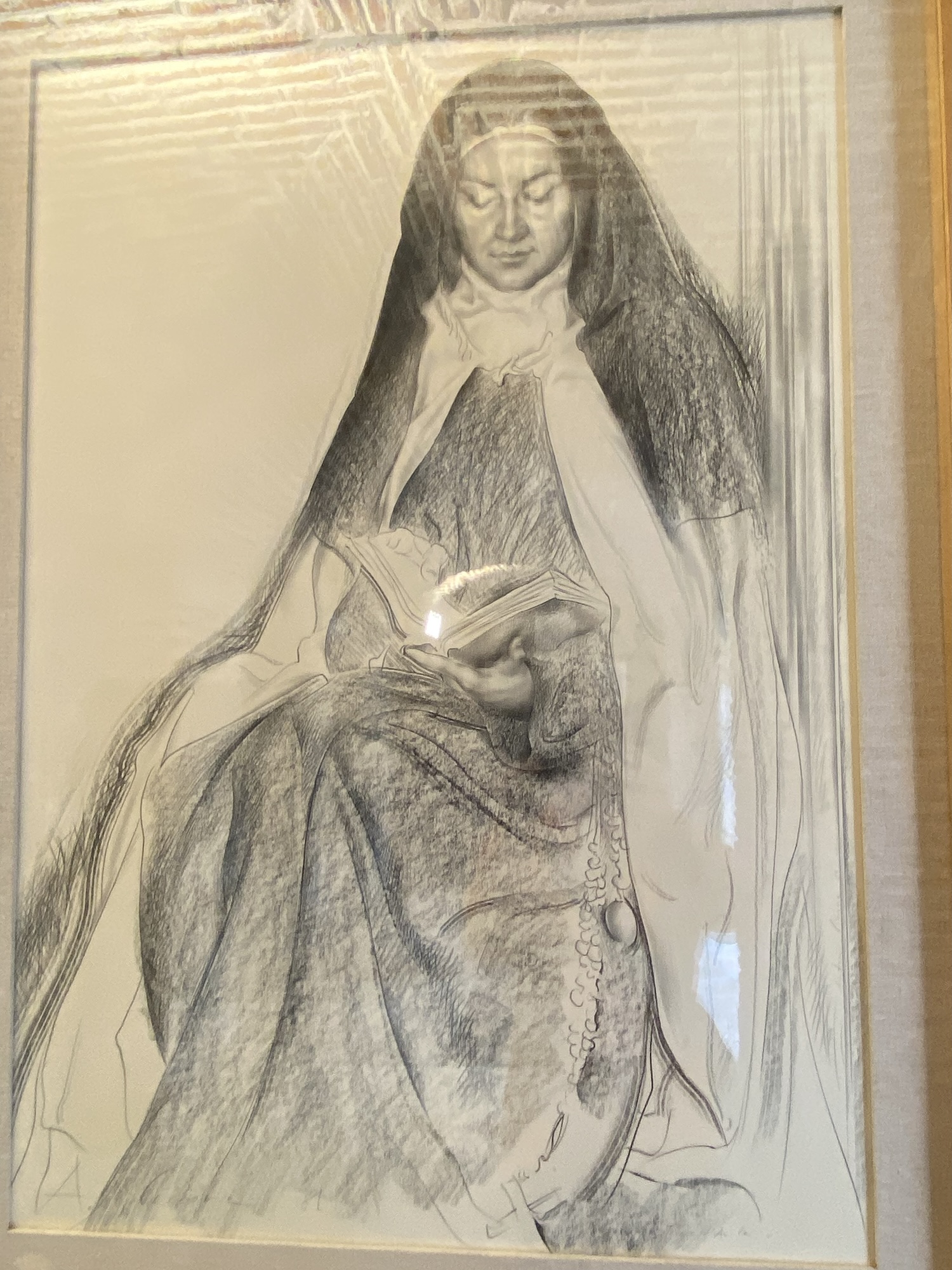
In the display of the last part of her life some of her intelligence and diligence is evident : there are paintings of the saint quill in hand and book on lap, absorbed in writing. These images were produced quite a while after her death.
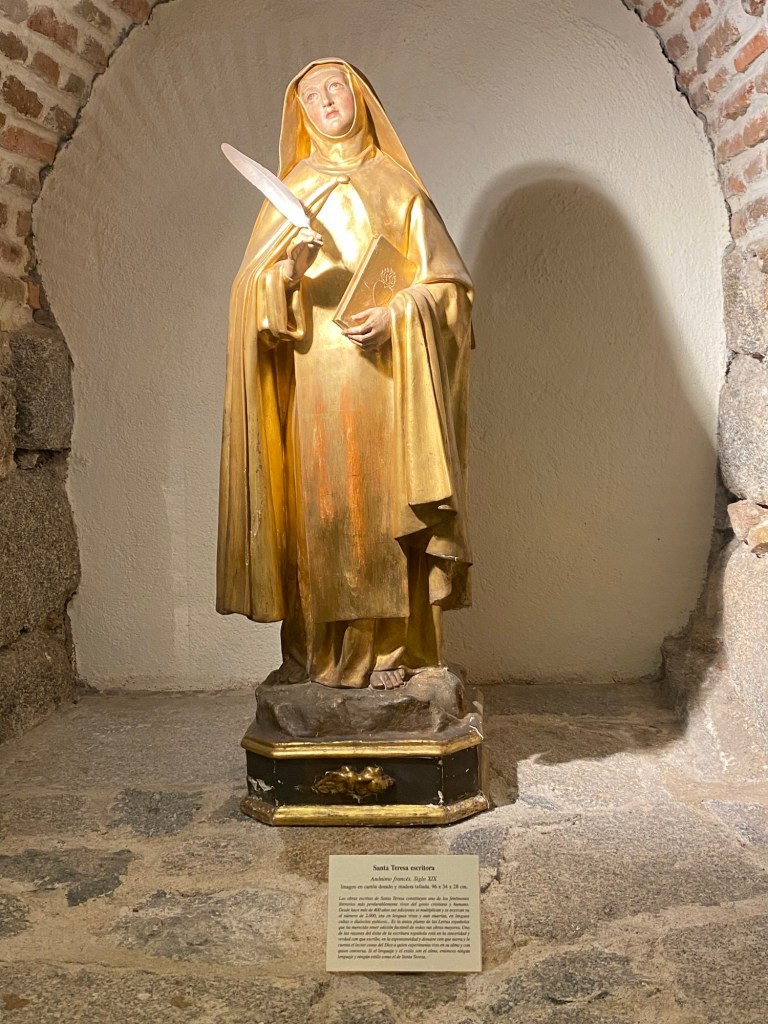
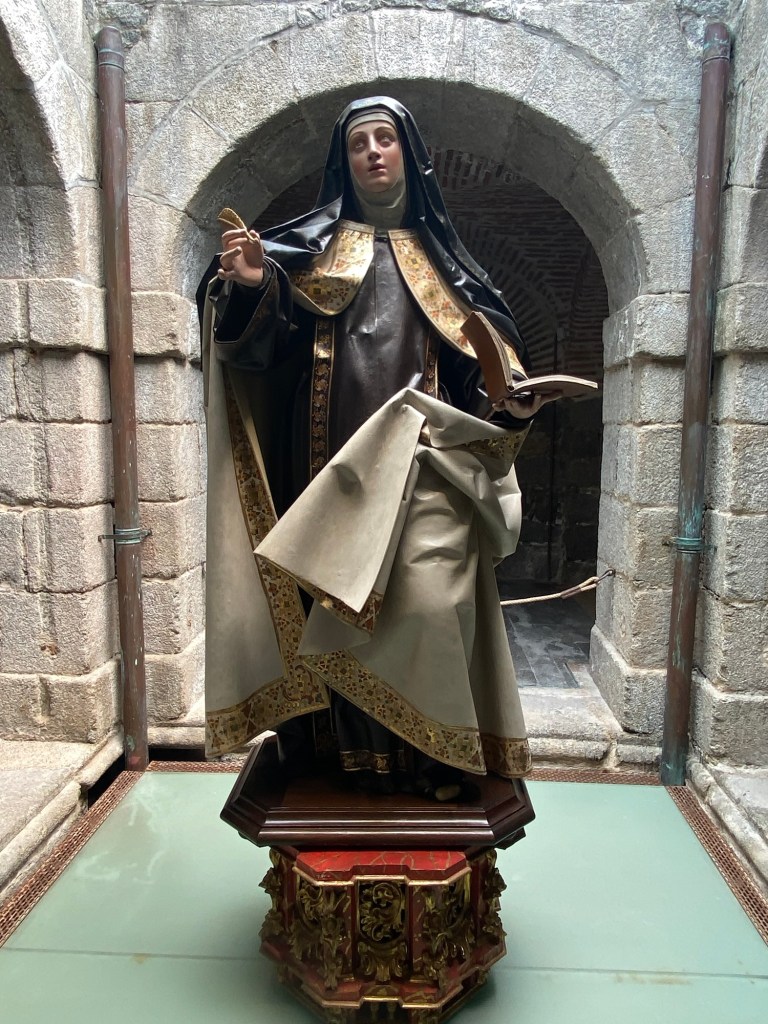
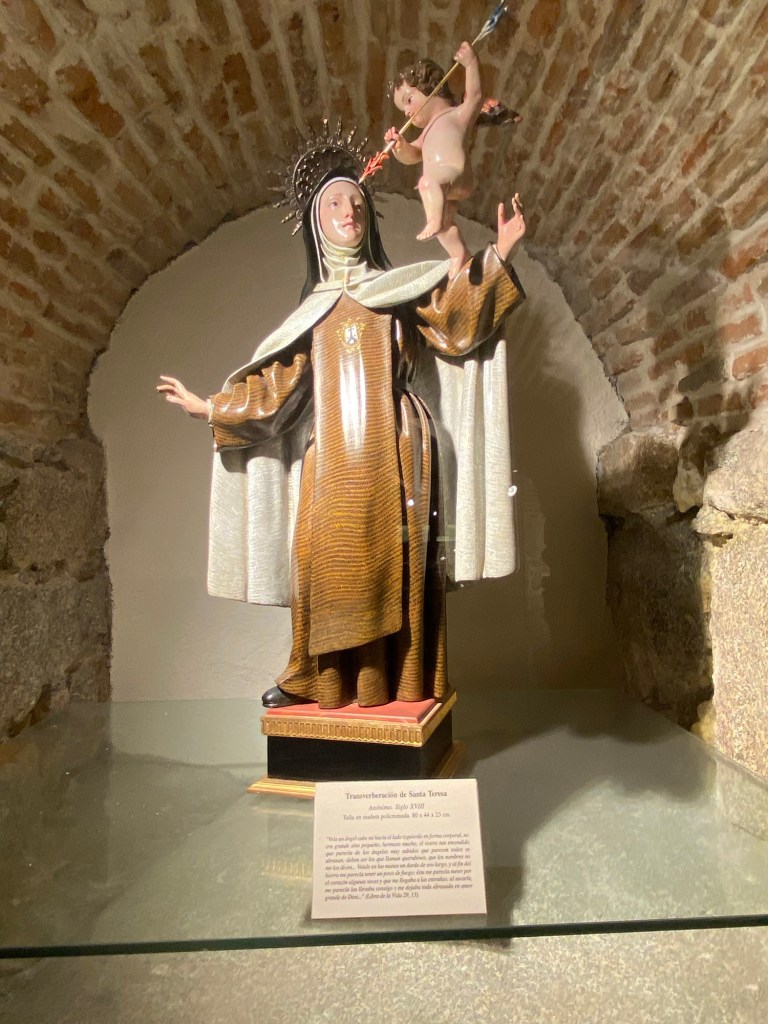
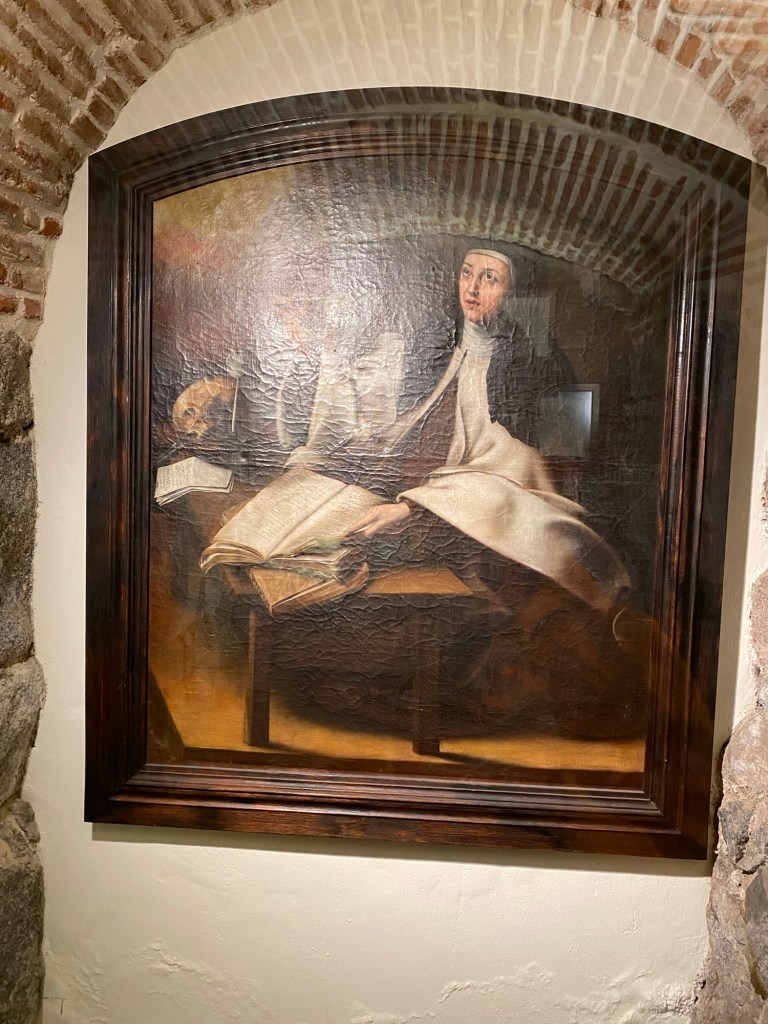
The depictions of Teresa , Doctor of tbe Church, date from 17C. She is one of the few females whose thoughts and writings are recognised by the Church whose practices she persistently and bravely tried to change in the last 20 years of her life.
As a 15 yr old Teresa read a lot, and wrote in the 15C when most people ,especially women , were illiterate.
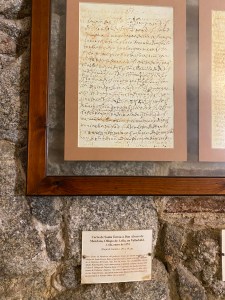
Most of the museum focuses on her early life as a young girl,(and holy from the start , which she wasn’t), her saintliness, and her ecstasies.

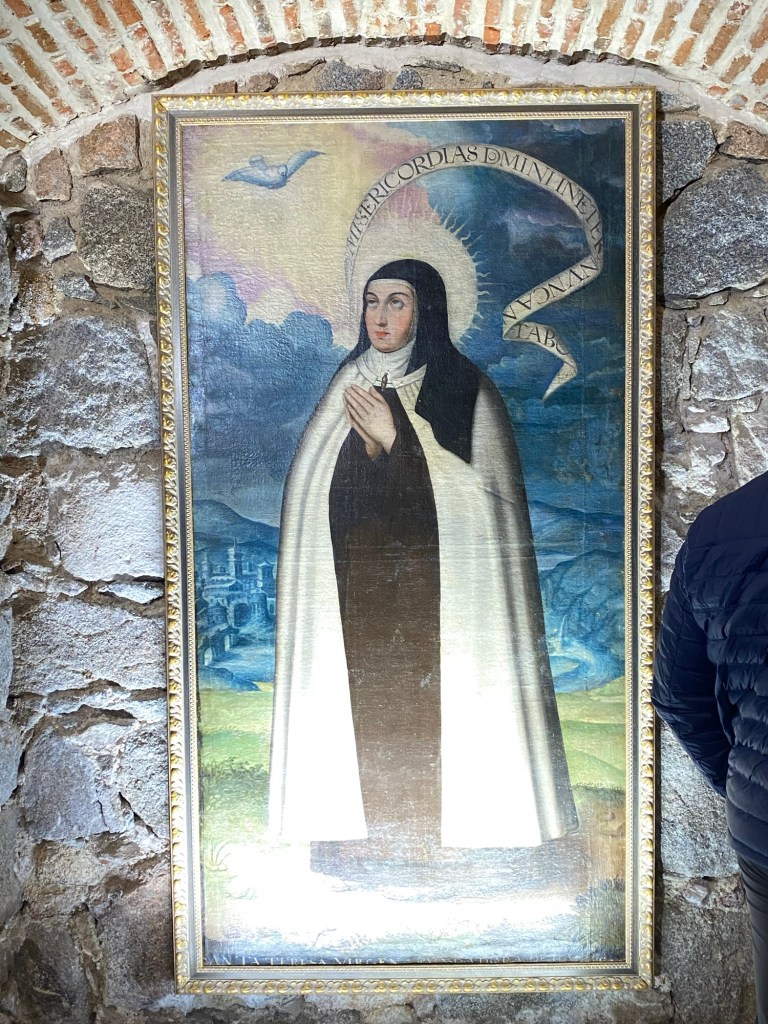
Where is Teresa de Cepeda y Alumada in all this? Born 1515, she entered the Carmelite Convent in Avila in her twenties following her father’s wishes. She struggled with faith and was unwell for a long time , until in 1555 she apparently had a spiritual awakening.
She was interrogated by the Inquisition, her writing examined, ordered to be silent. She lived and spoke out in dangerous times and her mysticism was viewed as of the devil.There were disputes with the Bishop , and the reports even went to Rome.
My pervading image of Teresa is of an older woman making her way steadily along the hot dusty path from Avilla to Tormes , wearing those cumbersome Carmelite robes, sandled feet. As she went she founded Convents ( total 30 in different parts of Spain) . She was unwell a lot of the time and died at 67 in Alba de Tormes.
Her last words , reportedly, were
“ After all I die as a child of the Church “
In the last section of the museum numerous saints surround Teresa, in various postures of ecstasy or martyrdom , and of course most of them are men. St John of the Cross was a good friend , and a supporter when she established new convents and monasteries. But here he intrudes in her story.
I went on to the Cathedral, built over the family home. As I said earlier, there was the original baptismal font and a model of the room she lived in when she first joined the Carmelites . However alongside right alongside is the splendid chapel. It feels like she has been lifted out of that plain room to glitter and money. I think Teresa would object, or at least chuckle at the absurdity ,
I managed to coincide with a mass being said and so the Cathedral was quiet.
In the silence and the age old ritual of the mass, I let go of cynicism and doubt. Grace found a way through. I recalled Santa Teresa’s words;
“Let nothing disturb you, nothing frighten you, all things are passing. God is unchanging”
Maybe it was the Saint , maybe … But I shared that grace with you my friend.
Ve con Dios , with grace. Buen Caminos to both of us on our home turf .
Con abrazos
Susana
 Sambasue21